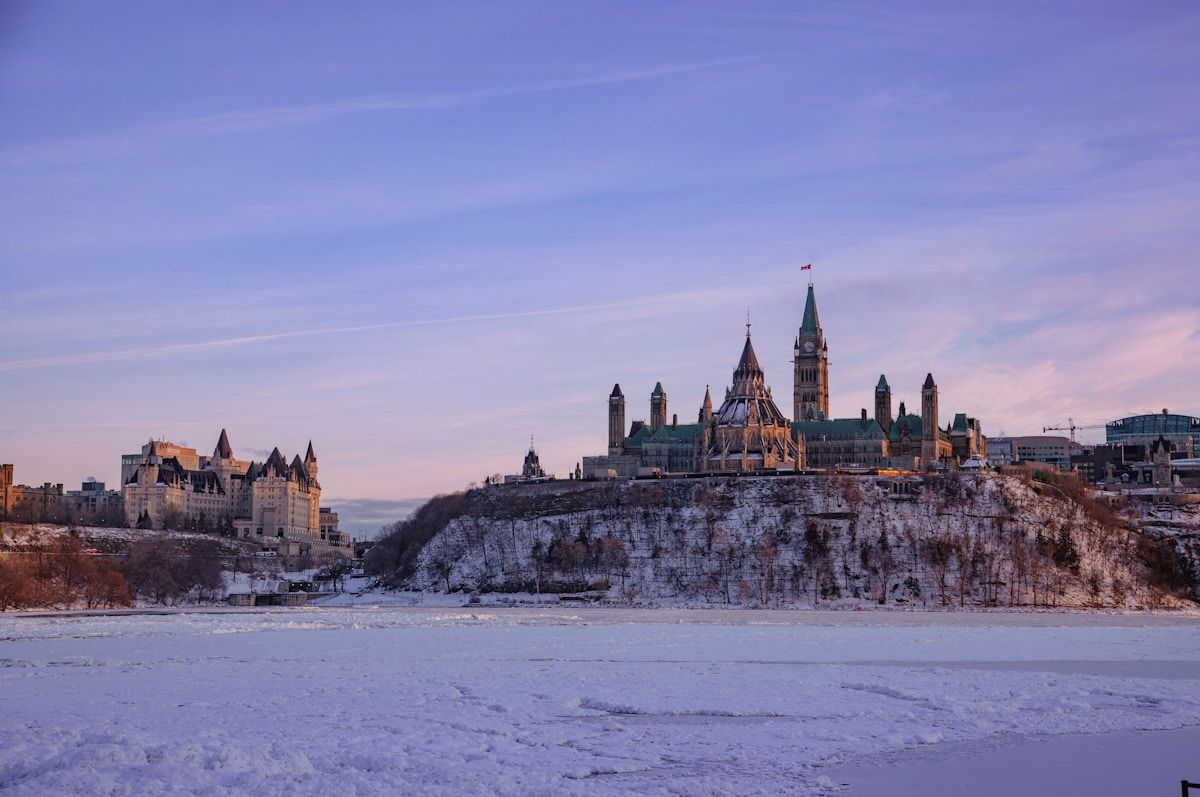
Ottawa is one of the most quietly cinematic cities in Canada, and most visitors never realise just how many extraordinary photo spots the capital has hiding in plain sight.
From the Neo-Gothic domes of Parliament Hill reflecting off the Ottawa River at golden hour, to the hidden murals tucked behind ByWard Market’s cobblestone alleys, to the wild summit lookouts inside Gatineau Park — the city rewards photographers who venture beyond the obvious postcard angles. The light here shifts dramatically with the seasons: spring tulips set against grey stone, summer sunsets blazing over the Gatineau Hills, autumn maples setting the whole riverscape on fire, and winter transforming the Rideau Canal into something that looks like a scene from a Scandinavian travel film.
This guide covers every category of photo spot the city has to offer. Whether you’re a tourist with a smartphone, a local looking for a fresh angle, or a professional planning a commercial shoot, there is something here for you.
Key Highlights
TL;DR: Ottawa’s best photo spots span iconic landmarks like Parliament Hill and the Rideau Canal, hidden gems like Bate Island and Gatineau Park’s Champlain Lookout, and vibrant street photography in ByWard Market. Spring is ideal for tulip shots, fall delivers spectacular colour, and winter offers moody blue-hour magic. Most spots are free, accessible by OC Transpo, and work equally well with a smartphone or DSLR.
| Quick Facts | Details |
|---|---|
| 📅 Best season | Late spring (May–June) and early fall (September–October) |
| 📍 Most iconic spot | Major’s Hill Park for classic skyline sunsets |
| 🎟️ Cost | Free (all outdoor spots; museums require admission) |
| ⏰ Best time of day | Golden hour (30–45 min before sunset) or blue hour (20–30 min after) |
| 🚗 Transit | OC Transpo: Rideau, Lyon, and Parliament stations serve downtown spots |
| 🌡️ Winter tip | Bring extra batteries; cold drains batteries in under an hour |
| 📷 Skill level | All spots work for smartphones; DSLR unlocks reflections and long exposures |
Parliament Hill — The Landmark Every Photographer Needs
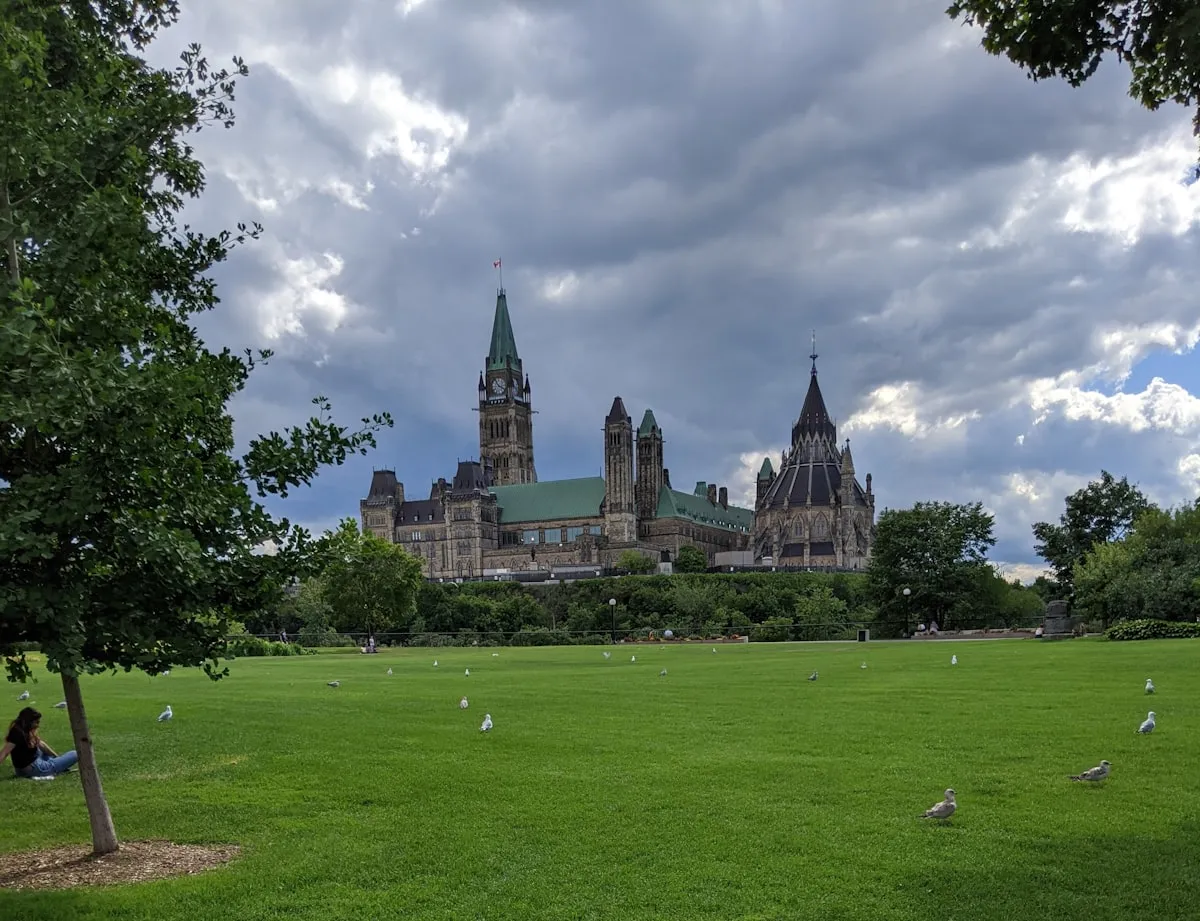 Parliament Hill’s Neo-Gothic spires and the Peace Tower reflected in the Ottawa River — one of the city’s most recognisable compositions
No visit to Ottawa is complete without a session at Parliament Hill, and the good news is that this landmark rewards photographers whether they shoot from the front lawn or hunt for less-visited angles around the back.
The Front Lawn and Peace Tower
The front grounds of Parliament Hill are bounded by Wellington Street, Elgin Street, and the Rideau Canal. The pointed spires, the Peace Tower clock, and the ornamental Gothic Revival stonework all glow magnificently in late afternoon side-lighting. The Peace Tower acts as a natural vertical anchor in almost any composition — use it as a leading line toward the canal or frame it against the sky.
Many local photographers will tell you that shooting from the ByWard Market side of the canal (across the water) often produces a more balanced composition than the crowded front steps. The canal adds depth and reflection, and you’re not fighting the tourist crowd for the same angle.
Best time of day: Late afternoon for warm side-lighting on the stone; blue hour for the tower’s spotlight-lit front. Best season: Late spring (May Tulip Festival crowds are worth the chaos for colour variety) and early fall for softer light. Access: Park on nearby side streets or take OC Transpo to Rideau or Lyon station. The front steps are free and open to the public.
Behind the Hill and the Library of Parliament
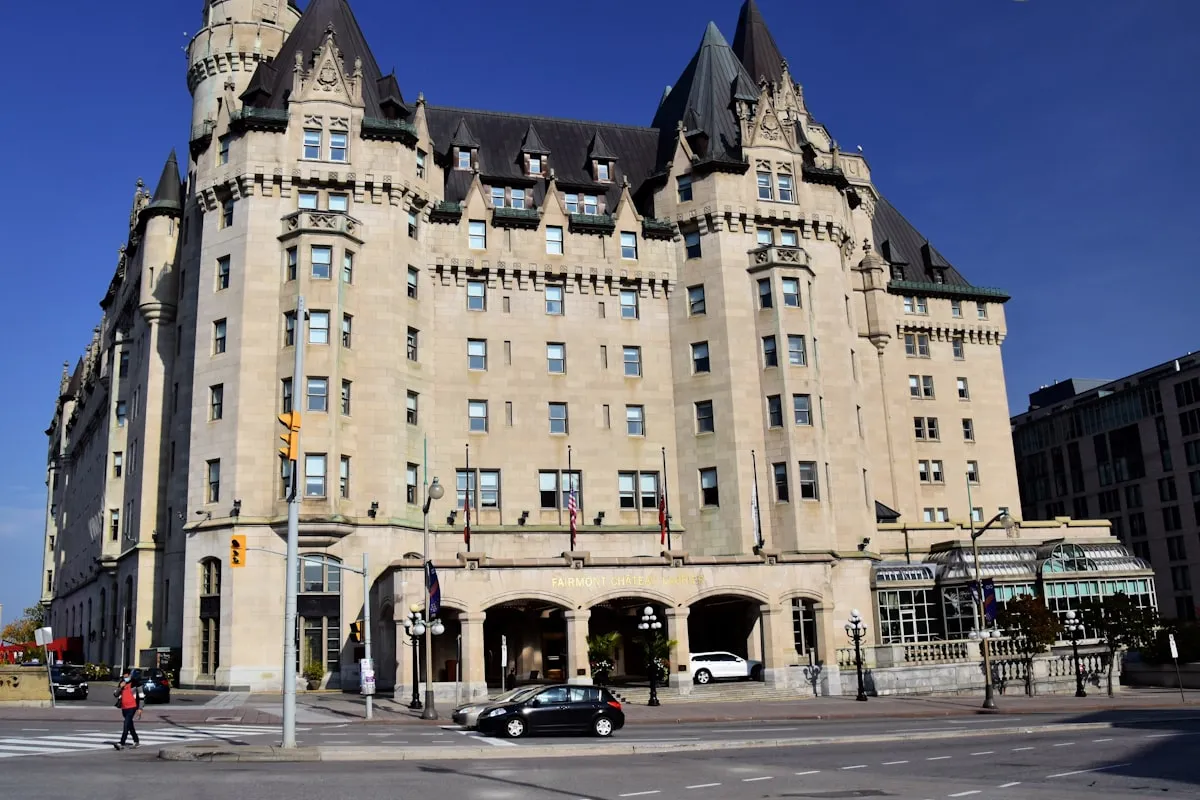 The Château Laurier and its famous terrace overlooking the Rideau Canal — a favourite vantage point for photographers combining architecture, water, and the Parliament skyline
The rear side of Parliament Hill, near the Ottawa River and the Alexandra Bridge, gives you the Library of Parliament’s distinctive copper-green dome, the river, and the Gatineau Hills all in one frame. Photographers consistently describe this perspective as feeling more authentically Canadian — architecture and wilderness coexisting in a single shot.
Best time of day: Sunset for reflected light off the river; blue hour for the river-facing illumination. Best season: Late spring and early fall. Access: Walk along the river path from the Château Laurier or the Rideau Canal side. Parking is available along the river roads. Combine this spot with Major’s Hill Park or the Château Laurier terrace for a tight three-location sunset circuit.
The Rideau Canal — Reflections, Symmetry, and Four-Season Drama
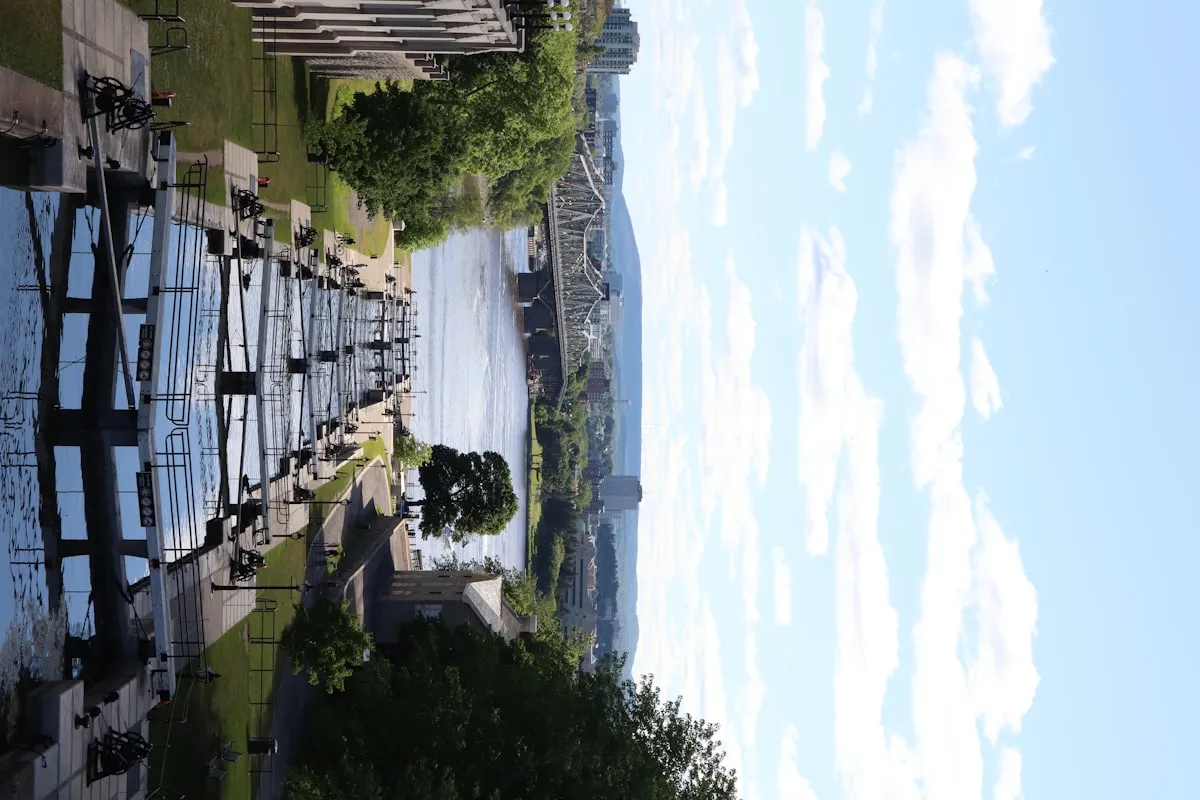 Aerial view of the Rideau Canal’s glassy surface and tree-lined banks — symmetry shots require nothing more than a smartphone
The Rideau Canal runs through the heart of downtown Ottawa, and its straight, glassy surface makes it one of the easiest places in the city to nail a symmetry shot without a drone. Whether you’re photographing from the bridges, the canal path, or the locks at Sapper’s Bridge, the canal rewards every skill level.
Central Downtown Section
The stretch between the Château Laurier and the locks includes several bridges and the central tree-lined path. Straight-lined bridges, evenly spaced trees, and the canal’s mirror-still surface in calm conditions make this ideal for reflections and architectural photography.
A local photographer in a Facebook group put it well: “The easiest place to get a balanced, postcard shot without needing a drone.” That description holds true year after year.
Best time of day: Sunset for warm sky reflections; blue hour for city-light reflections. Best season: Late spring when tulips line the banks; early fall for colourful foliage. Access: Park nearby or walk from the Château Laurier or Major’s Hill. The canal path is well-lit and busy enough to feel safe in the evening.
Rideau Canal Locks at Sapper’s Bridge
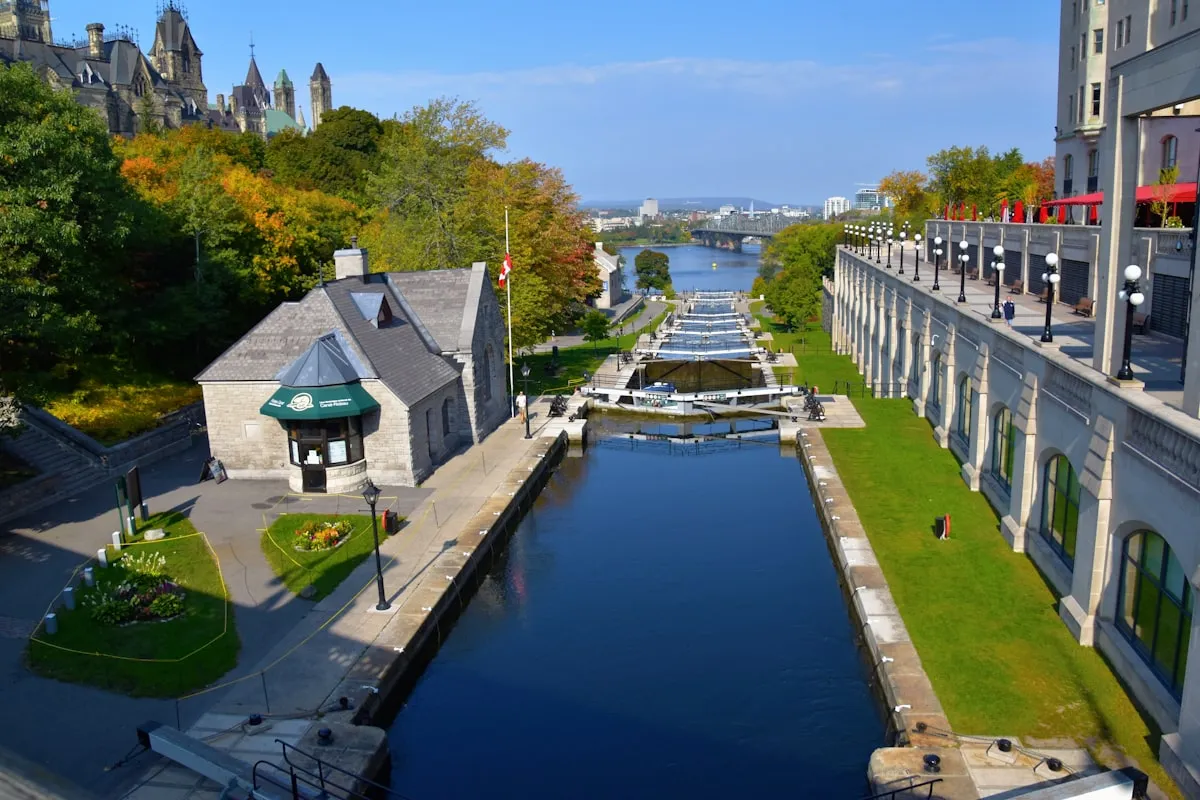 The stone locks at Sapper’s Bridge create natural sky mirrors at sunset — the layered composition of Parliament, Château Laurier, and the Gatineau Hills makes this spot uniquely Ottawa
At the locks, between Wellington and Rideau streets, the sun drops behind the Gatineau Hills while Parliament sits to your left and the Château Laurier to your right. The water at the locks is relatively still on calm evenings, creating natural sky mirrors. The old-style stonework and bridge railings add structural lines that guide the eye.
Best time of day: Sunset and blue hour. The canal’s orientation means the sun sets behind the hills rather than directly over the water, giving you a layered composition. Best season: Late spring (tulips along the canal banks) and early fall. Access: Short walk from Lyon or Rideau OC Transpo station. Combine with Major’s Hill Park, just a few minutes away on foot.
Sunset Spots — Where the Sky Does the Work
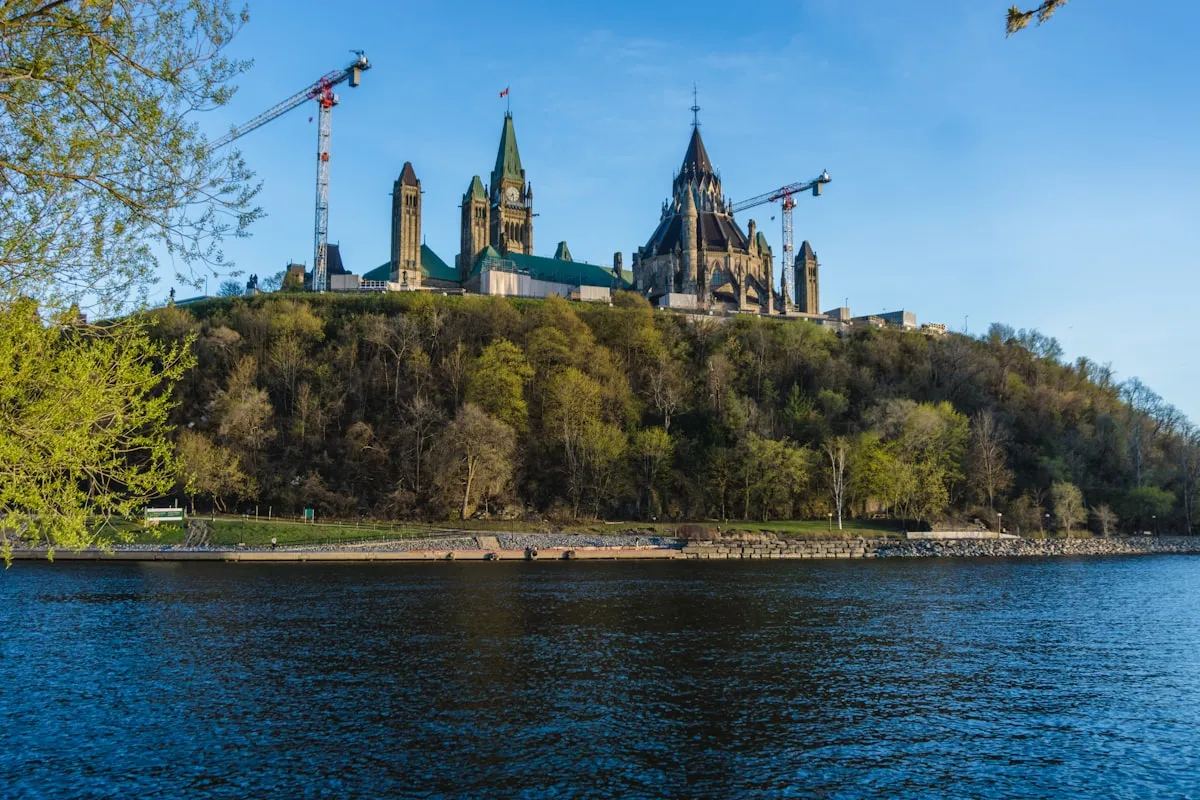 Major’s Hill Park is where Ottawa’s most iconic postcard shots are born — Parliament Hill, the river, and golden hour light in a single frame
Ottawa’s west-facing geography means the city catches some of Ontario’s most spectacular sunsets, particularly in late spring and early fall when the sky runs through deeper, richer colour palettes.
Major’s Hill Park — The Classic Ottawa Postcard
Major’s Hill Park sits between Parliament Hill and the Château Laurier, just off Elgin and Wellington streets. This is the shot that appears on every Ottawa postcard: the Parliament domes framed by the Ottawa River, warm golden light washing over the stone, and the river surface turning into a mirror of the sky.
Locals quietly grumble that it’s predictable — but it’s predictable for a reason. One Reddit user in r/Ottawa joked, “If your first Ottawa sunset isn’t from Major’s Hill, are you even doing it right?” The answer, of course, is that it depends on what you’re after. For pure, reliable, one-frame Ottawa drama, this park delivers every single time.
Best time of day: Arrive 30 to 45 minutes before sunset for golden hour, then linger another 20 to 30 minutes after for blue-hour city lights. Best season: Late spring (May–June) and early fall (September–early October) for the most saturated skies. Summer mosquitoes can be significant. Access: Street parking on Elgin or Wellington is limited in the evenings. Take OC Transpo to Lyon-O-Confederation or Rideau station and walk. The park connects easily by foot to the Rideau Canal locks and the Château Laurier terrace.
Nepean Point — Elevated Views Without the Effort
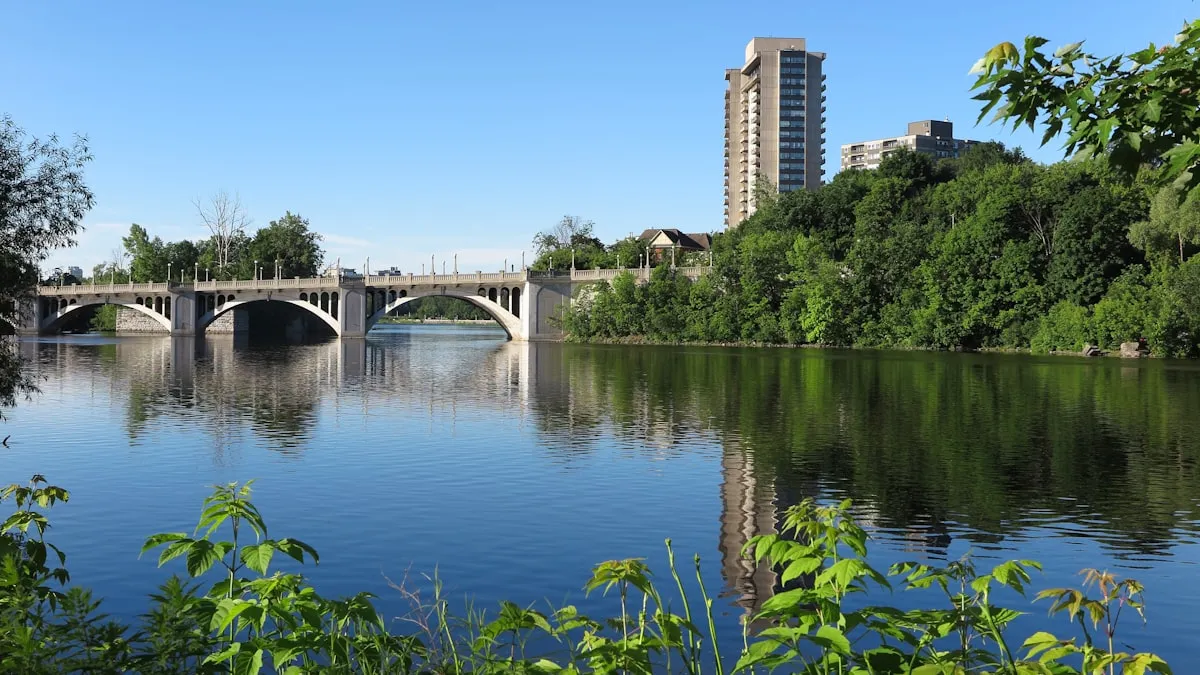 Nepean Point delivers one of Ottawa’s widest skyline sweeps without requiring any hiking — the whole city laid out in a single long-lens frame
Nepean Point (also known as Kiweki Point) is a gentle rise at the mouth of the Rideau River, near the National Gallery of Canada and the Canadian Museum of Nature. Despite feeling like an unofficial observation deck, it requires no hiking. From here you look across the river to Parliament, the Library of Parliament’s cupola, and the Château Laurier, all laid out in a single long-lens-friendly sweep.
The redeveloped walkways and viewing platforms make it easy to shift position and frame multiple compositions without fighting crowds or fences. Blue hour here is especially dramatic — the river and the bridges below all illuminate simultaneously.
Best time of day: Sunset for skyline warmth; blue hour for the illuminated bridges and riverside lights. Best season: Spring (May tulips) and fall (late September–October) around the riverside gardens. Access: Park on Lisgar Street or nearby side streets. A few minutes’ walk from the National Gallery or Museum of Nature, both accessible by the O-Train. Combine with the National Gallery plaza for modern architecture shots, or the Museum of Nature’s copper-domed exterior lit at night.
Local photographers often describe Nepean Point as “where you go when you want the same skyline as Major’s Hill but with fewer people and more angles.” If you have time for only one elevated viewpoint, this is a strong candidate.
Bate Island — Ottawa’s Best-Kept Sunset Secret
 Bate Island’s western shore faces directly into the setting sun over the Ottawa River and the Gatineau Hills — the kind of spot that makes the whole city feel like a European port town
Bate Island is a small, rocky outcrop near Westboro Beach, and it is one of the most quietly beloved photo spots in the city. The western shore faces directly into the setting sun over the Ottawa River and the Gatineau Hills. Photographers spread out along the rocks, reflections stretch across the water, and the after-sunset twilight can last far longer than you expect on clear evenings.
A commenter in a regional photography forum described it as “the kind of sunset spot that makes you feel like you’re on vacation in a small European port town, not in the middle of Canada.” That is an unusually accurate description.
Best time of day: Start shooting 45 minutes before sunset and keep going for 30 to 60 minutes after as the sky deepens and the city lights across the river come on. Best season: Summer (June–August) for the most vivid water reflections; shoulder season (May or September) for softer light and fewer people. Access: Walk from Westboro Beach or across the nearby pedestrian bridge. Limited street parking on the west side of the river. Combine with Westboro Beach for a full sunset-to-dinner loop — the neighbourhood has excellent cafés for warming up afterward.
Safety note: Rocky edges are slippery when wet. Wear grippy shoes and watch children near the water. The island is not patrolled after dark.
Alexandra Bridge — Silhouettes and Layered Cityscapes
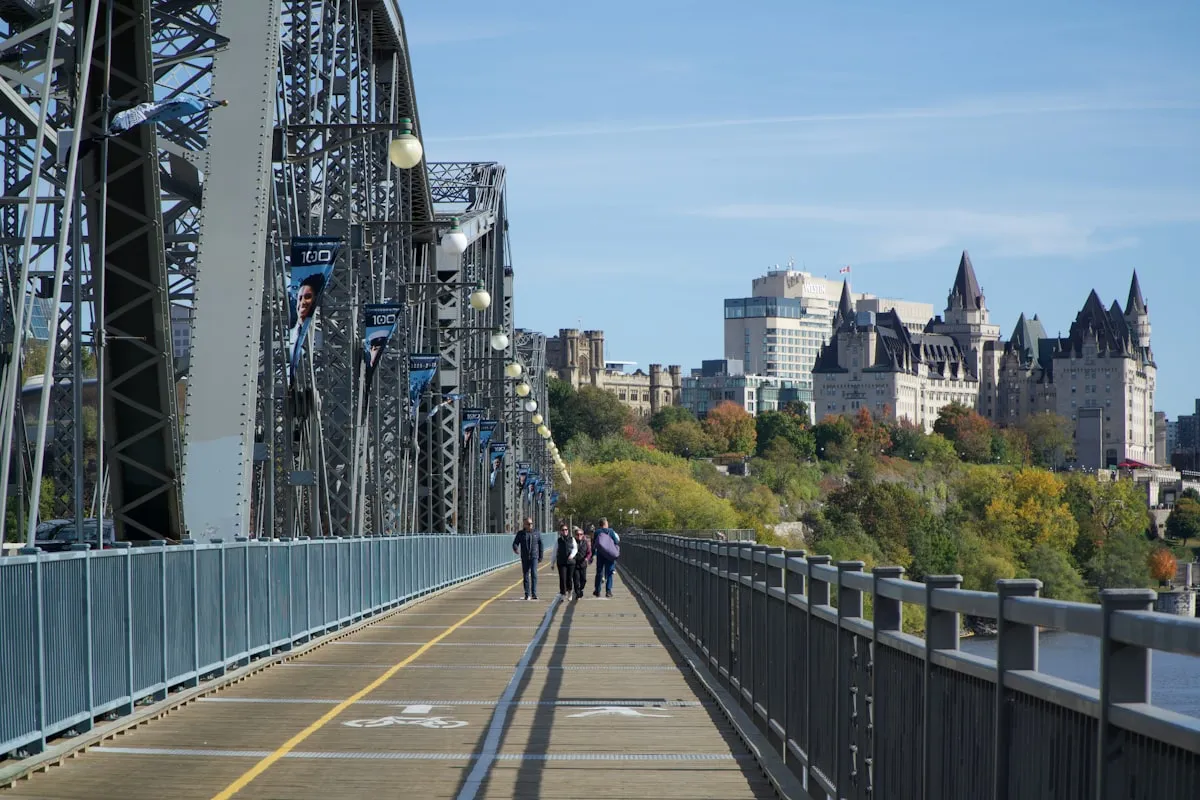 The Alexandra Bridge pedestrian walkway — Parliament Hill becomes a sharp silhouette against the blazing sky at sunset
The Alexandra (Interprovincial) Bridge has a pedestrian walkway that links Ottawa to Gatineau. Walking it at sunset turns Parliament Hill into a sharp silhouette against a blazing sky while the Ottawa River carves a clean horizontal line below your feet. It is a favourite of local Instagram photographers because it is a little less crowded than the downtown core while still delivering a canonical Ottawa composition.
Best time of day: Blue hour for dramatic city-light silhouettes; sunset for warmer colour tones. Best season: Summer for clear skies; winter for rare snow-and-lights combinations. Access: Park near the Ottawa side of the bridge or walk along the Rideau Canal path to the bridge entrance. The walkway is well-lit and generally safe, but it is exposed and windy — keep bags and gear secure. Combine with Nepean Point or the Château Laurier terrace for a “bridge–river–hill” golden-hour tour.
Westboro Beach — Open Sky and Sandy Horizons
Westboro Beach’s long sandy stretch and open western horizon — no buildings, no obstacles, just the full sky colour show
Westboro Beach runs along the Ottawa River between the Alexandra Bridge and the Sir John A. Macdonald Parkway. The long sandy stretch and open western horizon mean you see the entire sunset colour show without buildings blocking the view. One Reddit photographer described it as “our little slice of Mediterranean, just without the actual Mediterranean.”
The shallow water creates excellent reflections, particularly for long-exposure shots of people strolling at the water’s edge. In summer, the beach fills with locals during golden hour, giving you plenty of opportunity for street-style candid shots.
Best time of day: Sunset exclusively — the open western exposure means you want to be on the sand, not behind a building. Best season: Summer (June–August) for the warmest golden hour light and people-in-the-frame energy; spring for fewer crowds. Access: Park on nearby side streets or walk from the Westboro O-Train station. Combine with Bate Island (reachable on foot) for a paired sunset session.
Hidden Gems — Where Locals Go to Shoot
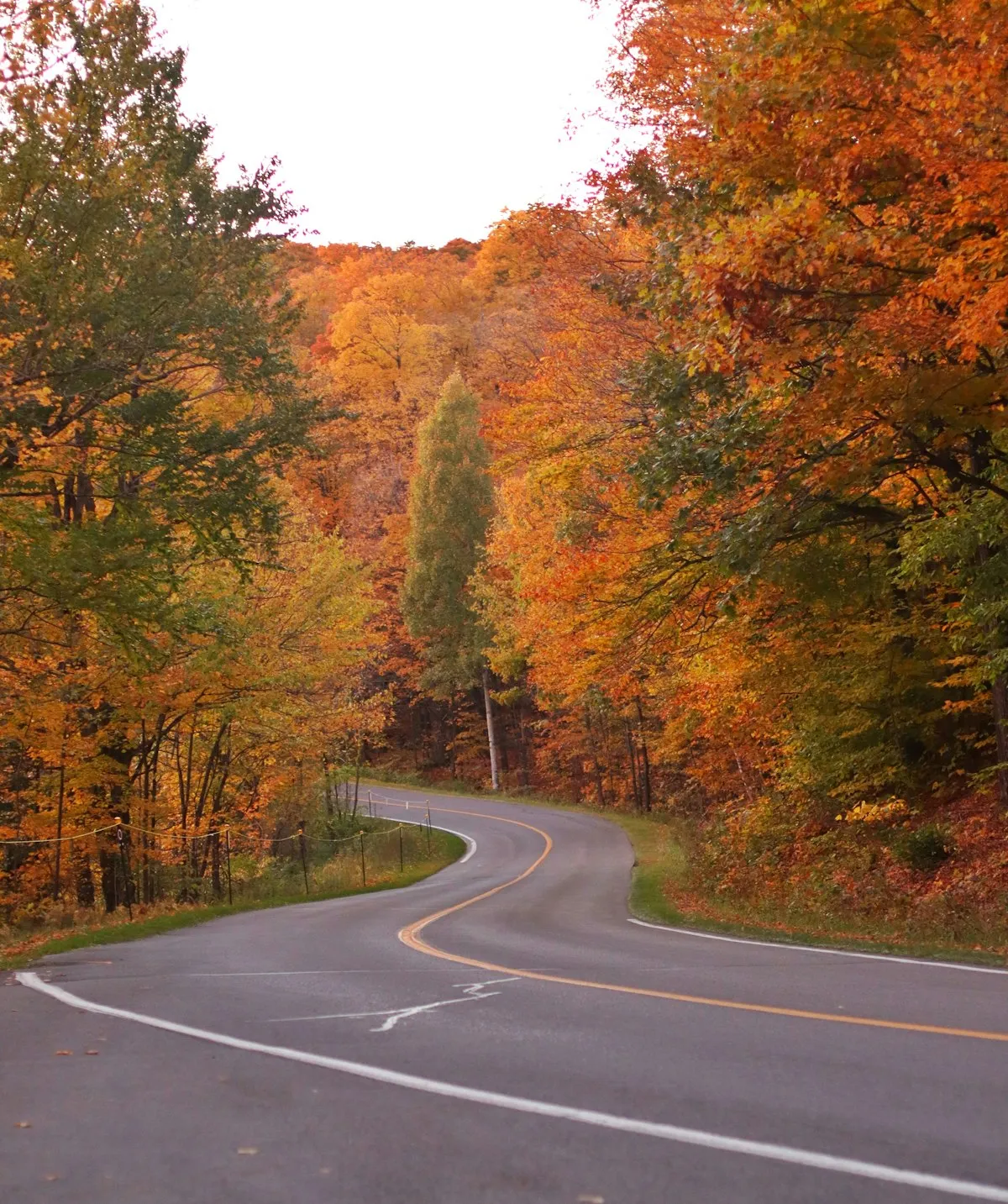 Gatineau Park’s Champlain Lookout — elevation and wilderness combine for views that make the whole city look impressively small
Gatineau Park — Champlain Lookout
Gatineau Park is technically in Quebec, but it sits directly across the Ottawa River from the city and functions as Ottawa’s backyard wilderness. The Champlain Lookout, on the eastern side of the park, is perched high above the Ottawa River and delivers panoramic views that make the city look impressively small.
Fall-colour photography posts from this area regularly generate thousands of local shares, with comments like “this is why we tolerate the 45-minute drive in.” The combination of forest, lakes, and river views from elevation is unlike anything the Ontario side can offer.
Best time of day: Sunrise for mist-filled valleys; late afternoon for warm sidelighting on the hills. Sunset is technically possible but requires clear weather and some planning to get the right angle. Best season: Mid-September through late October for peak fall colour. Access: Drive or take a taxi/ride-share; OC Transpo does not serve the park directly. A vehicle is strongly recommended. Parking fees apply at park entrance points. Budget a full morning or afternoon for the trip.
Mud Lake (Jack Layton Station)
 Mud Lake is best accessed from the O-Train’s Jack Layton Station — boardwalk trails lead through the wetland where colourful foliage reflects in still water
Mud Lake is aConservation area near the western end of the O-Train’s Trillium Line, accessible from the Jack Layton Station area. It is one of the best birding locations in the city, and in fall the colourful foliage reflects in the still water surrounding the wetland, creating natural compositions that require almost no skill to make look beautiful. Local photographers specifically recommend it for bird photography with autumn backdrops.
Best time of day: Morning for bird activity; late afternoon for foliage reflections. Best season: October for peak fall colour; May for spring migration birds. Access: Walk from Jack Layon Station (Trillium Line) or park on nearby residential streets. Well-maintained boardwalk trails. Free admission.
ByWard Market Side Alleys and Murals
 The side alleys of ByWard Market hide vibrant murals, textured brick, and the kind of visual details that reward photographers who wander off the beaten path
Beyond the main ByWard Market square (bounded by York, Wellington, William, and Dalhousie streets), the narrow side alleys hide vibrant murals, rusty fire escapes, and textured brick walls that local photographers return to again and again. The combination of old-world architecture, colourful graffiti, and seasonal decorations — Christmas lights in winter, tulip displays in spring — makes these overlooked nooks reliably “Instagram-ready.”
The market changes character dramatically with the season. Spring brings tulip festival decorations and outdoor café season. Summer fills the square with market stalls and buskers. Winter wraps the whole area in snow and string lights.
Best time of day: Late afternoon for warm sidelighting in the alleys; early evening for string-light and signage glow. Best season: Spring (tulip festival) and fall (coloured leaves framed by brick). Access: Rideau or Lyon OC Transpo station, then a short walk. Combine with the main market square and the Château Laurier view from the canal.
Seasonal Photo Spots — What to Shoot and When
Ottawa’s photo spots are not static backdrops — the city transforms so completely between seasons that the same location can look like a completely different place in summer versus winter.
Spring — Tulips, Blooms, and Fresh Light
 Commissioners Park during the Canadian Tulip Festival — over a million tulips make this the most spectacular spring photography event in the capital
Commissioner’s Park and the Experimental Farm: The Tulip Festival in May sees over a million tulips planted across the city, with Commissioner’s Park along the Rideau River being the most concentrated display. The Canadian Tulip Festival is one of the largest in the world, and the combination of tulip beds, historic barns at the adjacent Experimental Farm, and the river backdrop makes this the most spectacular spring photography event in the capital.
Best time: Mid to late May, early morning to avoid crowds and capture dew on petals. Best tip: The tulip beds near the National Gallery and Commissioners Park are the most reliable. Check the official tulip count online before heading out — bloom timing shifts slightly each year depending on winter thaw.
Summer — Golden Hour and Long Evenings
Summer extends shooting hours naturally — golden hour can last past 9 PM in June. The open-sky spots (Westboro Beach, Bate Island, Gatineau Park lookouts) are at their best, and the long twilights make blue-hour shots easier to plan. Outdoor patios in the Glebe, Little Italy along Preston Street, and ByWard Market all provide lifestyle street photography opportunities that the other seasons simply cannot match.
Best time: The 8:30–9:30 PM golden hour window in June and July. Best tip: Schedule your main shoot for around 8 PM to account for setup time, then shoot through until blue hour ends near 10 PM on the longest evenings.
Fall — Colour, Mood, and Drama
Autumn is arguably Ottawa’s most dramatic season for photography. Gatineau Park’s forests turn orange, red, and gold, and the Rideau Canal trees light up in warm tones that make even a smartphone shot look professional. The NCC (National Capital Commission) maintains extensive parkland along the Ottawa River and the Rideau River that is well worth exploring.
Best time: Mid-September through late October. Peak colour in Gatineau Park typically arrives in the third week of October, though this shifts slightly with weather. Best spots: Gatineau Park (Champlain Lookout, King Mountain), the Rideau Canal path, Mud Lake, and any residential street lined with maple trees.
Winter — Blue Hour Magic and Snowy Silence
Winter transforms Ottawa’s photo spots into something almost otherworldly. The Rideau Canal becomes the world’s largest skating rink, Parliament Hill is dusted in snow, and the blue hour stretches far longer in the shorter days. Cold air holds less moisture, which often means crisper air and more saturated sky colours at sunrise and sunset.
Best time: January and February for the deepest winter snow cover and longest blue-hour windows. The canal is typically fully frozen and open for skating from January through March, depending on weather. Best tip: Bring more batteries than you think you need. Cold temperatures drain lithium batteries rapidly — keep spare batteries in an inside pocket against your body. Also note that icy paths at spots like Nepean Point require care near the river edge.
Photography Tips for Ottawa’s Light and Weather
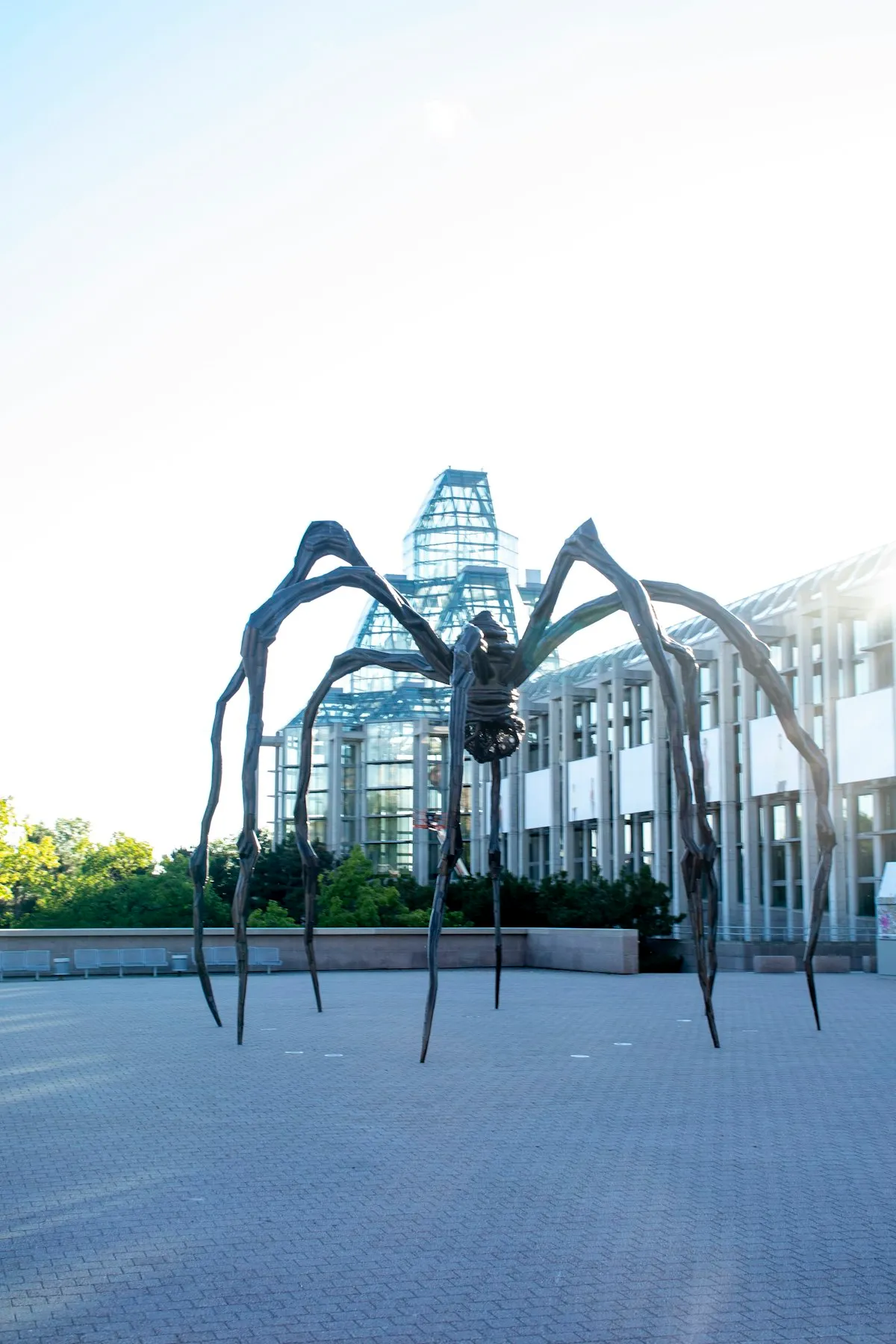 The National Gallery of Canada’s striking modern architecture and plaza — a year-round favourite for architectural photography in any season
Golden Hour and Blue Hour Strategy
Ottawa sits at roughly 45 degrees north latitude, which means the golden hour in summer can last well over an hour — you have more time to work with than photographers in southern cities might expect. In winter, golden hour compresses to around 30 minutes, and the sun sits much lower in the sky, producing a flatter but more atmospheric light.
Blue hour arrives quickly after sunset, especially in winter when darkness falls by 4:30 PM. For most locations, the window between golden hour ending and full darkness is 20 to 40 minutes. Plan to be in position 15 minutes before you intend to start shooting.
Camera Settings for Ottawa Conditions
Overcast days: Do not pack away your camera. Overcast skies in Ottawa (common in spring and fall) act as a natural softbox, eliminating harsh shadows and producing rich, even colour. This is ideal for street photography and portraits in ByWard Market.
Reflections: For water reflections on the Ottawa River or Rideau Canal, use a polarizing filter to cut glare and deepen the reflection. Set your aperture to f/8 to f/11 for maximum sharpness across the frame.
Blue hour: Increase your ISO to 800–1600 and use a tripod if possible. Without stabilization, anything below 1/30 second at arm’s length will show motion blur from handshake.
Winter shooting: Drop your exposure compensation by 1/3 to 2/3 of a stop to prevent snow from looking grey rather than white. White balance can shift toward blue in cold conditions — switch to “cloudy” or “shade” white balance for warmer tones.
Smartphone Photography Tips
Smartphone photographers should focus on composition over equipment. Ottawa’s architecture and riverscapes are forgiving subjects — strong leading lines (the canal bridges, the Parliament steps, the river shoreline) do most of the compositional work for you.
Use the Rule of Thirds: Enable the grid overlay on your phone’s camera. The intersection points are where you place your subject — Parliament’s Peace Tower at the top-left intersection, the river horizon at the lower third, for example.
Portrait mode vs. landscape: Save portrait mode (blurred background) for ByWard Market murals and street details. For skyline shots, switch to landscape mode and keep the horizon level.
Clean your lens: This sounds obvious but is frequently forgotten in winter. A frosted or fogged lens will produce hazy, low-contrast images. Keep a microfibre cloth accessible.
Ottawa Photo Spots by Category
Whether you know what kind of shot you’re after or just want to explore, this comparison table helps you pick the right spot for your shoot.
| Category | Spot | Best Season | Best Time | Access | Skill Level |
|---|---|---|---|---|---|
| Sunset (skyline) | Major’s Hill Park | May–Jun, Sep–Oct | Golden/blue hour | Walk from Rideau/Lyon stations | Beginner |
| Sunset (open sky) | Westboro Beach | Jun–Aug | Sunset only | Walk from Westboro LRT | Beginner |
| Sunset (hidden gem) | Bate Island | Jun–Aug | Golden/blue hour | Walk from Westboro Beach | Intermediate |
| Elevated viewpoint | Nepean Point | May, Sep–Oct | Sunset/blue hour | Walk from Gallery/Nature Museum | Beginner |
| Bridges/silhouettes | Alexandra Bridge | Year-round | Blue hour | Walk from Rideau Canal path | Beginner |
| Landmarks | Parliament Hill (front) | May, Sep–Oct | Late afternoon | Rideau/Lyon stations | Beginner |
| Landmarks (quiet angle) | Parliament Hill (back) | May, Sep–Oct | Sunset/blue hour | Walk from Château Laurier | Intermediate |
| Reflections/symmetry | Rideau Canal | May, Sep–Oct | Sunset/blue hour | Walk from Major’s Hill | Beginner |
| Nature/wilderness | Gatineau Park (Champlain Lookout) | Sep–Oct | Sunrise/sunset | Car required | Intermediate |
| Birds/autumn | Mud Lake | Oct | Morning | Walk from Jack Layton Station | Beginner |
| Street art/murals | ByWard Market alleys | May, Sep–Dec | Late afternoon | Rideau/Lyon stations | Beginner |
| Winter/ice | Rideau Canal (skating) | Jan–Mar | Blue hour | Walk from downtown | Beginner |
| Cherry blossoms | Commissioner’s Park | Mid-May | Early morning | Car or bus | Beginner |
| Architecture | National Gallery plaza | Year-round | Late afternoon | Gallery station | Beginner |
FAQ
Q: What is the best month to photograph Ottawa’s fall colours?
Mid-September through late October, with peak colour in Gatineau Park typically arriving in the third week of October. The Rideau Canal trees usually peak a week or two earlier than the Gatineau Hills. Check the NCC fall colour tracking map for real-time updates before planning your trip.
Q: Where can I photograph the Parliament Hill Peace Tower at night?
The front lawn and steps of Parliament Hill are lit at night, making the Peace Tower and flanking buildings ideal for blue-hour shots after dark. The best angle is from the pedestrian bridge over the Rideau Canal on the ByWard Market side, which frames the tower against the canal and river. Major’s Hill Park also offers a rear perspective with river reflections.
Q: Are there any photo spots accessible by O-Train or bus?
Yes. Most downtown photo spots are reachable by OC Transpo. Rideau and Lyon stations serve Parliament Hill, ByWard Market, and the Rideau Canal. The Westboro O-Train station is steps from Westboro Beach. The Trillium Line’s Jack Layton Station is adjacent to Mud Lake. Only Gatineau Park requires a private vehicle.
Q: Is there a cost to photograph at these locations?
All outdoor locations — Parliament Hill, the Rideau Canal, Major’s Hill Park, Nepean Point, ByWard Market, Westboro Beach, Bate Island, Gatineau Park — are completely free to photograph. Indoor attractions like the National Gallery of Canada and the Canadian Museum of Nature require admission fees if you want to shoot inside, but their exteriors and plazas are accessible without charge.
Q: Can I shoot at Parliament Hill without a permit?
Yes, for standard tourist photography and casual shooting on the front and rear grounds. Commercial shoots, tripod setups in high-traffic areas, or shoots involving equipment beyond a handheld camera may require a permit from the National Capital Commission. For most visitors and hobbyist photographers, no permit is needed.
Q: What is the best spot for photographing the Rideau Canal in winter?
The central downtown stretch between the Château Laurier and Sapper’s Bridge is the most scenic section for winter photography. When the canal is frozen and the skaters are out, the long straight surface creates strong leading lines. Blue hour in January and February offers the best light, typically between 4:15 and 5:00 PM.
Q: Where is the best spot to photograph Ottawa’s tulip festival?
Commissioner’s Park along the Rideau River has the highest concentration of tulip beds. The National Gallery grounds also feature extensive plantings. The best light is in early morning (before 8 AM) to avoid both crowds and the harsh midday sun. Mid-May is peak bloom, but the exact timing shifts slightly each year depending on spring temperatures.
Q: Are tripods allowed at these Ottawa photo spots?
Tripods are generally permitted on public grounds and along NCC pathways. Inside National Capital Commission buildings or on federal building property (including Parliament Hill itself in some areas), tripod use may be restricted. For casual blue-hour shooting on the canal path or in parks, a travel tripod or smartphone tripod is perfectly legal and often the key to sharp low-light images.
Q: What neighbourhood has the best street photography opportunities?
ByWard Market and the surrounding Sandy Hill streets offer the most concentrated street photography opportunities: vendors, buskers, murals, café culture, and architecture all within a few blocks. The Glebe (along Bank Street and surrounding South Ottawa) is excellent for lifestyle street photography — local shops, vintage stores, and neighbourhood character. Little Italy along Preston Street is another strong option, particularly for food and café imagery.
Q: Where can I find Ottawa’s best murals and street art for photography?
The side alleys of ByWard Market between Sussex Drive and Kent Street contain the highest concentration of murals. William Street and Clarence Street both have substantial pieces. For larger murals and graffiti art, the Under One Sky alley off Dalhousie Street and the walls along the Rideau Canal near the University of Ottawa campus are reliable spots. Many murals are refreshed annually during community art festivals, so content changes between visits.
Q: What is the best spot for sunrise photography in Ottawa?
Gatineau Park’s Champlain Lookout and King Mountain offer the most dramatic sunrise views, catching the Ottawa River valley and city waking up in morning light. Nepean Point is a more accessible alternative downtown — arrive 30 minutes before sunrise for the pre-dawn blue hour, which many photographers consider even more atmospheric than the actual sunrise moment. Mud Lake is ideal for reflective sunrise shots across calm wetland water.
Q: Where should I take photos with a drone in Ottawa?
Drone photography over Parliament Hill and the federal district requires Transport Canada authorization and may be restricted in security zones. NCC lands and Gatineau Park have their own drone policies — check the NCC website before flying. More accessible drone spots include the open areas around the Experimental Farm (near Commissioner’s Park) and the western reaches of the Ottawa River near Andrew Haydon Park. Always fly below 90 metres and keep the drone in visual line of sight.
Q: What photography spot is best for families with young children?
Westboro Beach is the most family-friendly option: the sandy beach and shallow water provide safe, controlled environments, and the sunset show is reliable. The Rideau Canal path is also excellent — the flat, paved surface is stroller-accessible and the views are continuously interesting. ByWard Market is another strong choice for families because there are washrooms, cafés, and shops nearby if you need to take breaks.
Q: Are there photography workshops or tours in Ottawa?
Several local photographers and tour operators offer themed Ottawa photography walks, particularly during tulip season (May) and fall colour season (October). Check platforms like Airbnb Experiences or local photography community groups on Facebook for up-to-date offerings. The Ottawa Photography Meetup group and the Ottawa Camera Club both hold regular meetups and are good ways to connect with local knowledge.
Q: Which Ottawa photo spots work best in fog or overcast weather?
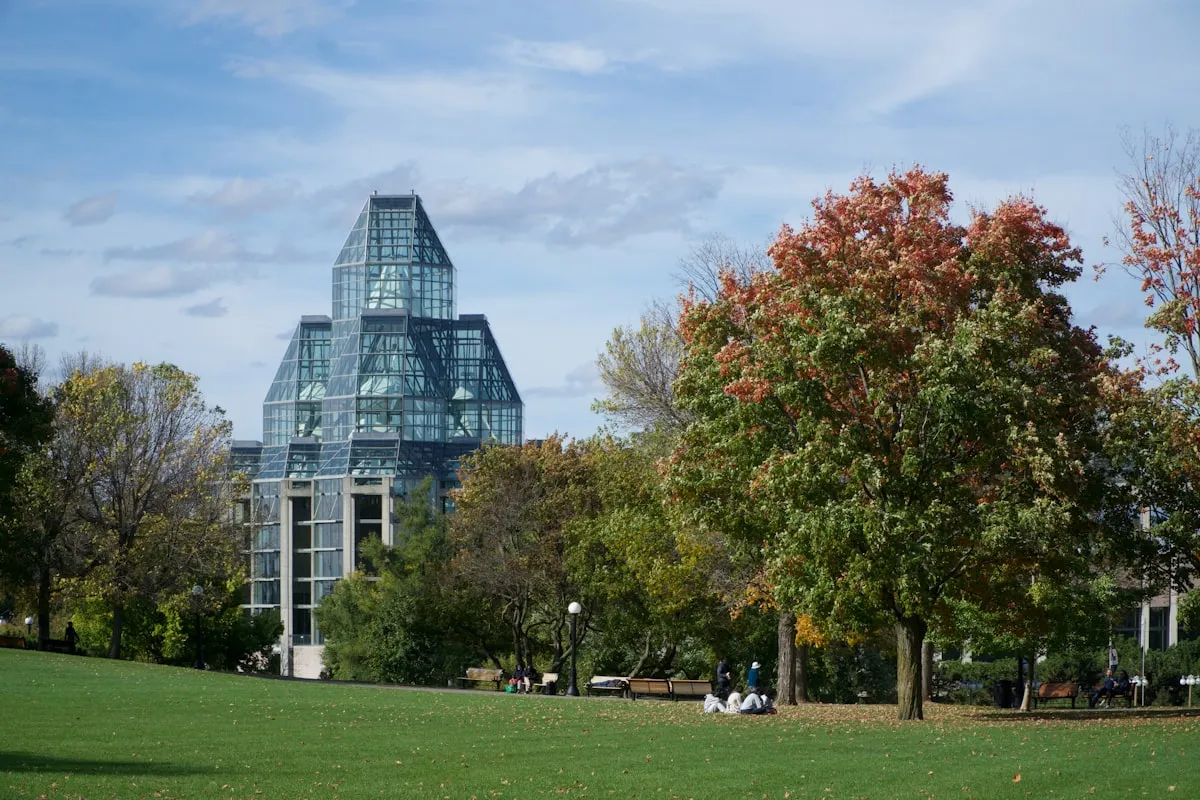 The Canadian Museum of Nature’s copper dome — even overcast skies treat this landmark with flattering, shadow-free light
Overcast conditions are excellent for ByWard Market street photography (no harsh shadows), the Museum of Nature’s copper dome (even, shadow-free light), and the National Gallery’s modern architecture. Mud Lake and the experimental farm tree lines work beautifully in mist. For moody atmospheric shots of Parliament Hill, an overcast day with a low cloud ceiling can produce dramatic, almost European-looking images that sunny days cannot match.
Final Thoughts
Ottawa rewards photographers who take their time. The city’s photo spots are not exotic or far-flung — most are within a 20-minute walk of each other in the downtown core — but they require patience and timing to unlock properly. The difference between a mediocre snapshot and a memorable photograph here is almost always about the light, not the location.
Arrive early, stay late, check the weather forecast for atmospheric conditions, and do not underestimate what an overcast spring day or a frozen January evening can produce. Some of the most striking Ottawa photographs circulating online were taken in conditions that most visitors would consider “bad weather.”
The capital is still underphotographed relative to Toronto or Vancouver, which means there is genuine territory to explore. The hidden angles, the off-season visits, the early mornings before the tourists arrive — those are the shots that make people stop scrolling. This guide gives you the map. The rest is up to you.
Source: ViaOttawa — Original guide compiled from local photography community knowledge, Ottawa Tourism, and NCC (National Capital Commission) visitor resources.
For more Ottawa guides and local stories, explore Ottawa Where to Go or check out our guide to Gatineau Park hiking trails for outdoor photography adventures.