
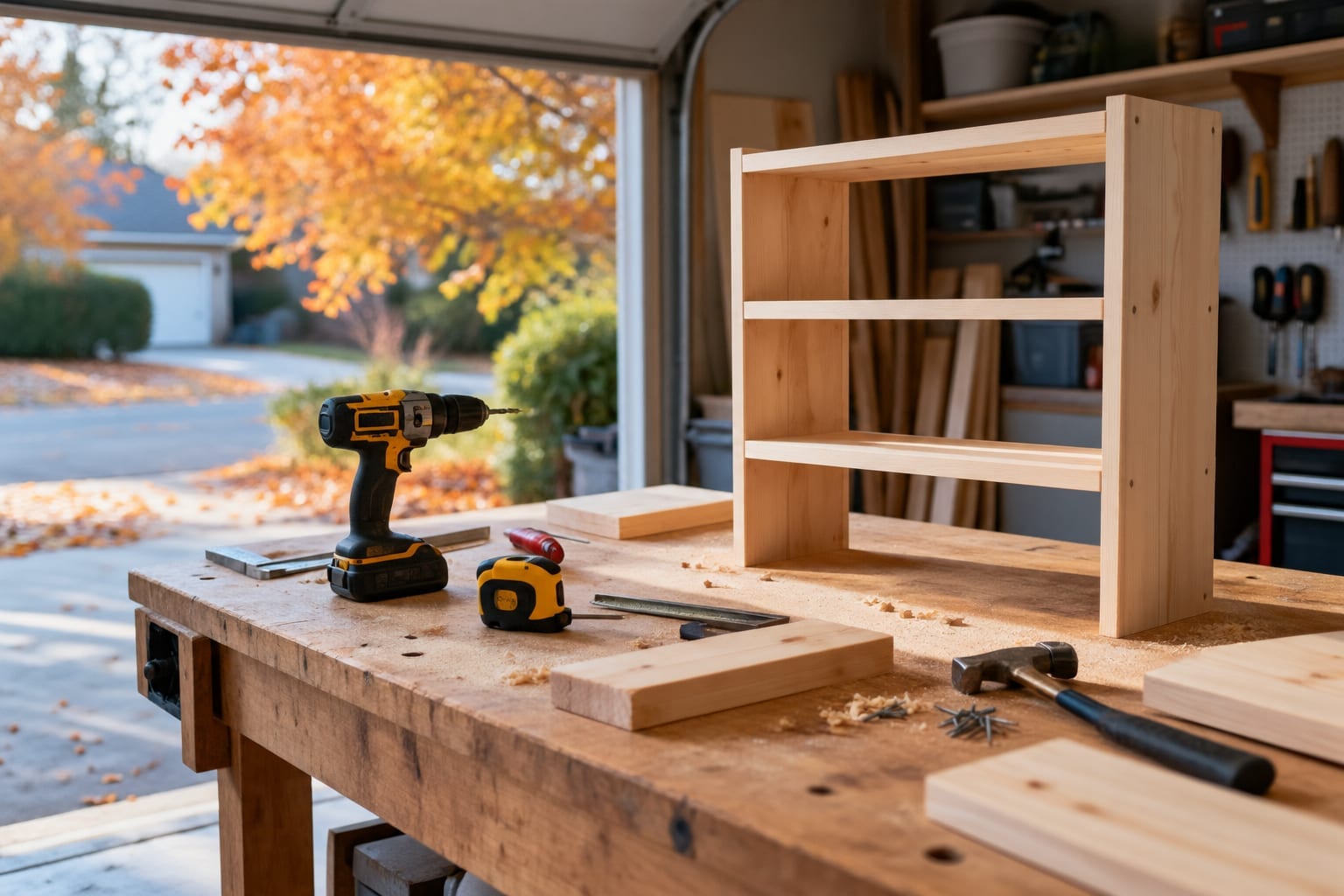
A weekend project in Ottawa costs less when you borrow the tools, buy used materials and know where the leftovers go.
Home improvement in Ottawa can be done on a tighter budget than most people expect. A volunteer-run tool library lends drills and saws to members, Habitat for Humanity ReStores sell donated doors, cabinets and flooring well below retail, and the City runs drop-off events for leftover paint, solvents and batteries. The part that trips people up is the waste. Renovation debris, lithium batteries and half-empty cans cannot go out with the regular garbage. This guide covers each step, plus the safety rules that apply before you cut, dig or open a wall.
Key Highlights
 Borrowing, reusing and disposing properly are the three places a DIY budget is won or lost.
TL;DR: Borrow tools from the Ottawa Tool Library (membership starts at $265 a year plus HST), shop the Habitat for Humanity Greater Ottawa ReStores for used building materials, and take leftover paint and solvents to a City hazardous waste event or a paint take-back retailer. Drywall, wood, plaster and concrete from a renovation go to the Trail Road landfill, not the curb. Call for utility locates before you dig, and file a notification with the Electrical Safety Authority before any wiring.
| Quick Facts | Details |
|---|---|
| 📅 Next City hazardous waste events | October 17, 2026 (Strandherd Snow Dump) and November 7, 2026 (Westbrook Snow Dump), 8 am to 4 pm |
| 📍 Tool library | 877A Boyd Avenue, Ottawa, ON K2A 2E2 |
| 🎟️ Tool library membership | $265 a year (individual) or $315 a year (household), plus HST. Students get $55 off |
| ⏰ Tool library hours | Tuesday to Thursday 6 pm to 9 pm, Friday 3 pm to 9 pm, Saturday 10 am to 1 pm. Closed Sunday, Monday and provincial statutory holidays |
Borrow Tools at the Ottawa Tool Library Before You Buy
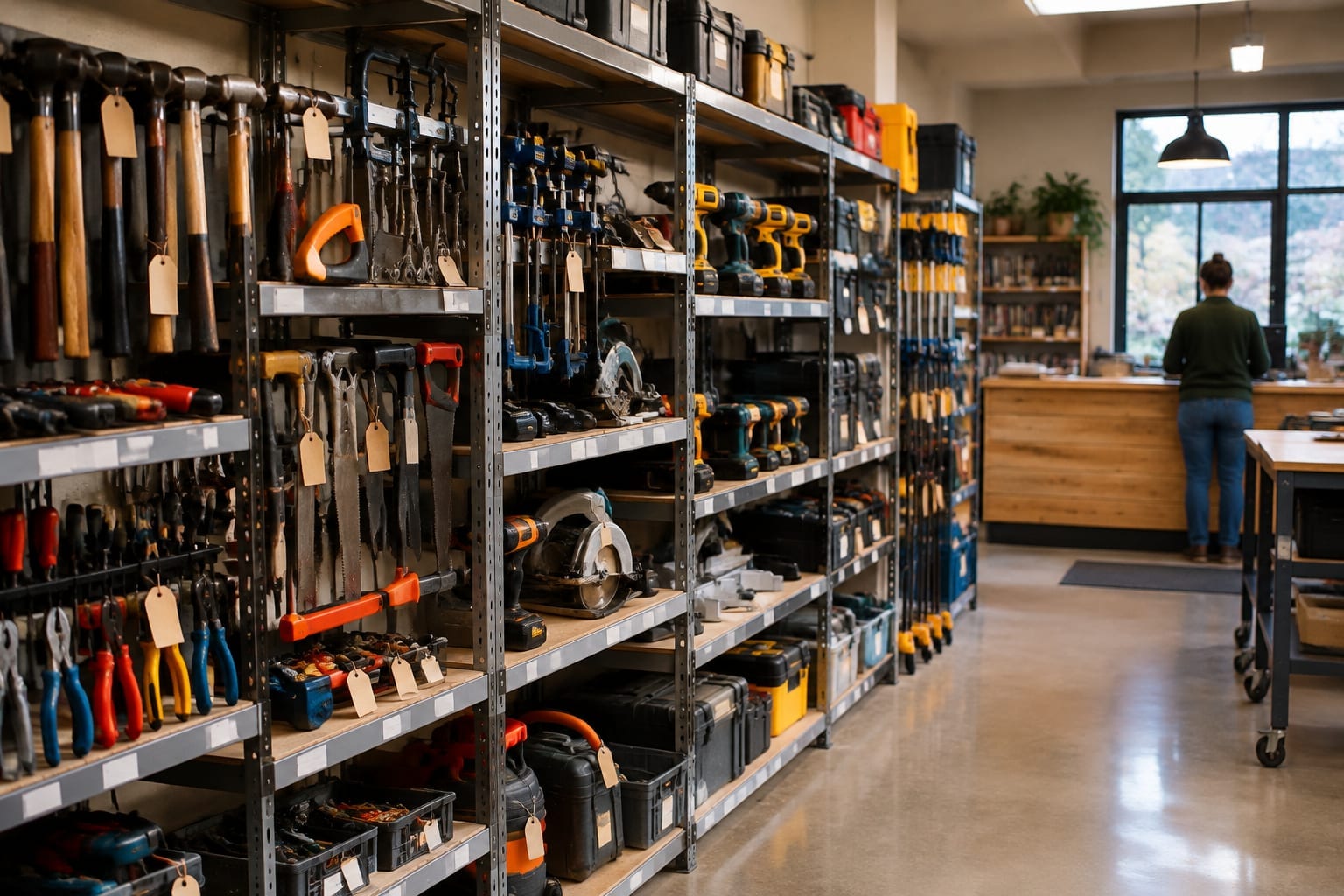 A tool library works like a book library: you sign tools out, use them for a project and bring them back.
The Ottawa Tool Library is a volunteer-driven, member-funded lending library. Members can take tools home for practical or creative projects, and the library says most of its inventory comes from donations by people who are downsizing, moving or cleaning out garages and sheds. It also runs repair cafés, workshops and a paid WorkSpace for people who need somewhere to build. The library is open limited hours because volunteers staff it, so plan your visit around the schedule in the Quick Facts table.
Membership is where the cost lives. The individual annual membership is $265 and the household membership is $315, both plus HST. Full-time post-secondary students get a $55 discount with proof of enrolment, and there is a monthly option for short projects. The library says its annual membership costs less than what most rental companies charge for a single day on some tools. For people who cannot afford the fee, it offers memberships in exchange for regular volunteering and reduced-rate memberships through its community fund.
Know the rules before you go. You must be 18 or older, and the library confirms your identity with government photo ID plus a second document showing your current address. A loan is one week, and you can renew once by phone or email if nobody is waiting for the tool. Late fees apply. The library's membership FAQ says nearly all tools are free to borrow for a week, while its borrowing policy page lists small per-day fees for power tools, so ask at the desk what your tool costs. If you are unsure how to use something, a volunteer "Tool Wizard" will walk you through it when you pick it up.
Habitat for Humanity ReStores: Used Building Materials in Ottawa
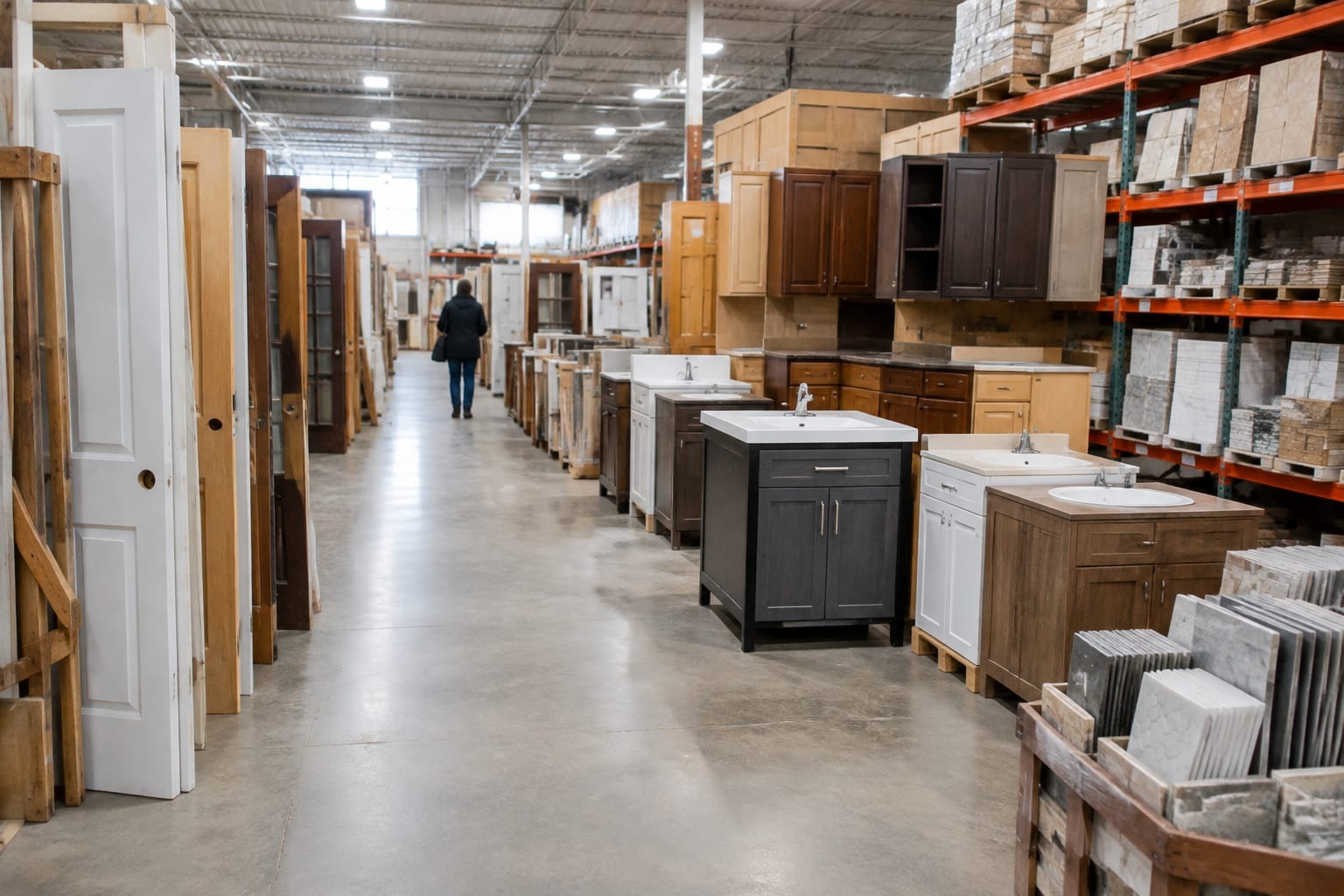 ReStores stock a rotating mix of donated and new-surplus doors, cabinets, fixtures and flooring.
Habitat for Humanity Greater Ottawa runs three ReStore locations. Each sells new and gently used building materials and home items, and the proceeds fund the charity's affordable homeownership programs. The ReStore says its prices run 50% to 90% below retail and that it charges no HST. Stock changes daily, so the online shop at restoregoshop.ca is a quick way to check before you drive over.
The three stores and their posted hours:
- City Centre, 250 City Centre Avenue, Unit 118 (613-366-1825): open 10 am to 6 pm every day.
- Train Yards, 768 Belfast Road (613-744-7769): open 10 am to 6 pm every day.
- Stittsville, 3 Iber Road (343-545-0481): Monday to Thursday 10 am to 7 pm, Friday 10 am to 8 pm, Saturday and Sunday 9 am to 6 pm.
What you can expect to find is a practical list. The ReStore names interior and exterior doors, windows, kitchen and bathroom fixtures and cabinets, flooring and tile, light fixtures, hardware, plumbing and electrical supplies, trim, lumber and new paint as items it commonly stocks. Condition varies, so measure twice and bring photos or dimensions of what you need.
You can donate as well as shop. The ReStores accept new and gently used renovation materials, but they do not take paint from the public, used toilets, carpet, mattresses or household hazardous waste, and they ask donors to call ahead because acceptance changes with supply and demand. Free pickup is available for large furniture and appliances within the service area, and a tax receipt is available on request for donated items valued above $100, once the item has sold. For other second-hand shopping, our guide to thrift stores in Ottawa is a good next stop.
Where Leftover Paint, Solvents and Batteries Go in Ottawa
 The City's hazardous waste events take paint, solvents and many other products that should never go in the garbage.
The City of Ottawa defines household hazardous waste as anything corrosive, flammable or poisonous, and says it should never go down the drain or out with regular garbage. The list includes paints and coatings, aerosols, fire extinguishers, propane cylinders, oven and window cleaners, pool chemicals, fertilizers and pesticides, motor oil and all light bulbs and tubes. For DIY projects, the ones you will meet most are paint, stain, solvents, adhesives and caulking.
The City's 2026 drop-off events still to come are:
- October 17, 2026, Strandherd Snow Dump, 4061 Strandherd Drive, 8 am to 4 pm. Enter through Philsar Street, because there is no access off Strandherd.
- November 7, 2026, Westbrook Snow Dump, 200 Westbrook Road, 8 am to 4 pm.
The rules are strict. The events are for Ottawa residents only, and commercial waste is prohibited. Containers larger than 20 litres are not accepted, and loads over 100 litres are refused. You stay in your vehicle while staff unload the trunk, so pack only what you want to dispose of, and line any cardboard box with a garbage bag. Electronic waste is not accepted. In 2025 the City held nine events, and nearly 17,500 residents dropped off about 503 tonnes of waste, so expect a line.
You do not have to wait for an event. For paint, stains and driveway sealers, the City says to return them to a take-back retailer, which you can find by typing the item into the City's Waste Explorer, or through the paint stewardship programme Product Care. Paint that has fully dried can go in the garbage. The City also runs a pilot of walk-up events for people without a vehicle, with a 20-litre limit, which take small paint cans, solvents, adhesives, caulking and small household batteries. Check the City's page for current dates.
Batteries need extra care. The City says to tape the terminals or put each battery in its own clear zip bag, and that applies to all lithium and lithium-ion batteries (including power-tool and e-bike packs), coin and button cells, rechargeables such as Ni-Cd and Ni-MH, 9-volt batteries and small sealed lead-acid batteries. Lithium-ion batteries must never go in the garbage, recycling or green bin because they can start fires. Many retailers also collect household batteries, and the Waste Explorer shows which ones are near you.
What Ottawa's Garbage, Recycling and Green Bins Do Not Take
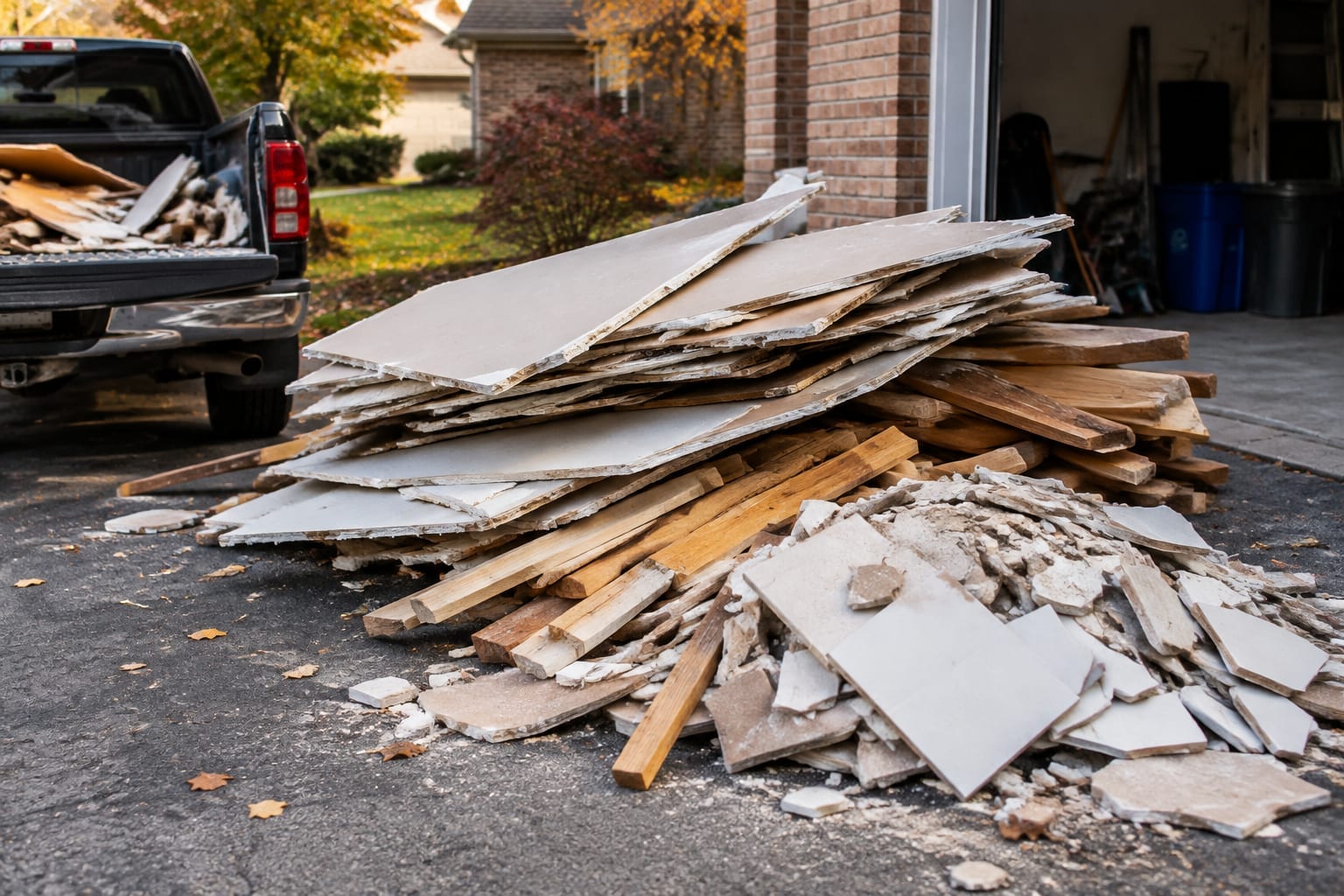 Renovation debris is the waste that most often catches homeowners out, because it is not part of curbside collection.
Plaster, wood (including pressure-treated lumber), drywall, concrete, asphalt and other waste from building, renovating or demolishing are not collected with regular garbage, according to the City. You take them to the Trail Waste Facility Landfill at 4475 Trail Road, or to another landfill. The site is open Monday to Friday, 7 am to 6 pm, and on selected Saturdays, and it is closed on Sundays. The City publishes the Saturday dates and the current rates, so check both before you load the truck.
A few landfill rules save time. Payment is contactless. Sort your load first, because scrap metal, electronic waste, tires and brush may be accepted free or at different rates. Recyclable packaging, such as cardboard boxes, glass, plastic and metal containers, is not accepted at the landfill, so unload your materials from the box and take the box home for your recycling bin. CSA-certified green patch footwear and hi-visibility clothing are required at the main disposal area and one of the small-load areas, while the other small-load area has no such requirement.
Other renovation leftovers have their own routes:
- Appliances. The City does not collect stoves, refrigerators, freezers, air conditioners, dryers, dishwashers, hot water tanks or furnaces at the curb. Fridges, freezers, air conditioners and dehumidifiers need their cooling chemicals removed and a tag from a certified technician before a landfill will take them.
- Large furniture. Sofas, mattresses and other bulky items are picked up at the curb if you put them out before 7 am on collection day.
- Light bulbs and glass. Fluorescent and energy-efficient bulbs go to a hazardous waste event or a retailer that takes them. Broken glass and mirrors should be packed in a cardboard box labelled "glass" for the collector's safety.
- Smoke alarms. The City says they are not hazardous and can go in the regular garbage.
- Aerosols. A can with anything left inside goes to a hazardous waste event. An empty can with its lid on goes in the garbage, or in the recycling bin if it held something like cooking spray or hairspray.
For the day-to-day bin rules and collection schedule, see our Ottawa garbage and recycling guide.
Renting Tools for One-Off Home Improvement Jobs
 Large, expensive and rarely used equipment is where a day's rental can beat buying or borrowing.
The tool library is built for the drill, the sander and the hand saw. It is a weaker fit for equipment you need on a Sunday morning, or tools that are large, specialized or in high demand. For those jobs, a rental counter at a local hardware or home supply store is usually the answer, and our hardware and home supply directory page lists businesses by neighbourhood so you can phone one close to your project.
A few questions are worth asking before you commit. What is the daily rate against the weekly rate, and when does the clock start and stop? Is a deposit or a damage waiver required, and what ID do they want? Does the price include blades, bits or fuel? Does the counter show you how to operate the tool safely? Comparing takes a few phone calls. The tool library says its annual membership costs less than a day's rental for some tools, but that only helps if the tool you need is on the shelf when you need it.
Home Improvement Safety Basics Before You Start
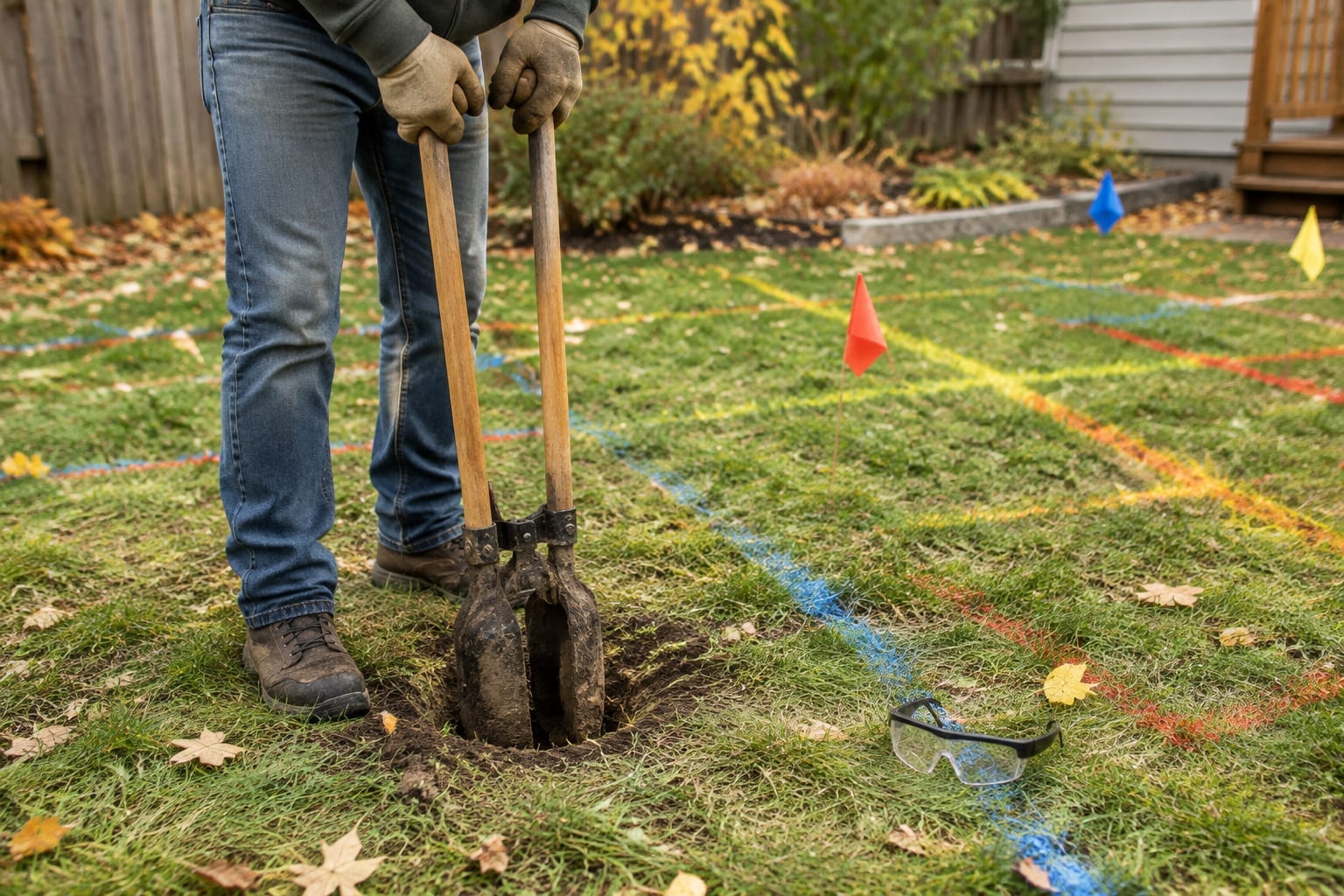 In Ontario, digging for a fence, deck or tree needs free utility locates first.
Three checks apply to many Ottawa projects, and each has an official source.
Digging. If you are planting a tree, building a fence or deck or landscaping, you must request a public utility locate before you dig. Ontario Dig Authority (also known as Ontario One Call) says to contact it at least five business days before a single-address project. The locate is free and it is the law, and you must wait for every utility to respond before you start. Public locates do not cover private lines you own, such as gas lines to a barbecue or pool heater, electrical lines to a shed or detached garage, sewer and septic systems, or wiring to security cameras. You are responsible for locating those yourself.
Electrical work. The Electrical Safety Authority (ESA) says homeowners may do electrical work in their own home, but even small jobs need a notification of work (what most people call a permit) filed with ESA before you begin, and fees for many small residential projects can be under $100. Only you or a licensed electrical contracting business may do the work, so friends, family and neighbours cannot help. You must have the work reviewed once it is complete, without hiding it behind drywall first, and ESA then issues a Certificate of Acceptance that matters for insurance and resale (our car and home insurance guide for Ottawa explains how cover works). ESA itself suggests hiring a licensed electrician as the safest choice.
Asbestos. The Canadian Centre for Occupational Health and Safety (CCOHS) notes that you cannot tell whether a product contains asbestos by looking at it, and that only laboratory testing can confirm it. Older flooring tiles, plaster, textured ceilings, siding, pipe wrap and vermiculite attic insulation are among the places it has been found. If asbestos is suspected, do not sand, scrape, saw or tear out the material yourself. Get it tested and hire a qualified specialist before the renovation begins.
On the tools themselves, wear eye protection, hearing protection and a dust mask suited to the job, and stop using any tool that feels unsafe. If a project involves water lines, our guide to frozen pipes and plumber costs in Ottawa covers shut-off valves and when to call a licensed plumber.
FAQ
Q: Can anyone borrow from the Ottawa Tool Library?
Only members can borrow, and members must be 18 or older. You create an account on the library's MyTurn system, buy a membership, sign the waivers and bring government photo ID plus a second document with your current address. Annual memberships are $265 (individual) or $315 (household), plus HST, with a student discount.
Q: Does the ReStore take leftover paint?
No. Habitat for Humanity Greater Ottawa lists paint from the public, household hazardous waste, used toilets, carpet and mattresses among the items it does not accept. Take leftover paint to a City household hazardous waste event or a paint take-back retailer found through the City's Waste Explorer. Fully dried paint can go in the garbage.
Q: Where do I take drywall and wood from a renovation?
The City does not collect drywall, plaster, wood, concrete or asphalt from renovations with regular garbage. Take it to the Trail Waste Facility Landfill at 4475 Trail Road, open Monday to Friday and some Saturdays, or to another landfill. Sort your load first and check the City's rates page, because fees depend on the material.
Q: What should I do with old batteries from power tools?
Never put them in the garbage, recycling or green bin. Tape the terminals or seal each battery in its own bag, then drop them at a retailer collection point shown in the City's Waste Explorer or at a City hazardous waste event. Lithium-ion packs are the highest risk because damaged ones can catch fire.
Q: Do I need a permit for DIY electrical work in Ontario?
Yes. The Electrical Safety Authority requires a notification of work before you start, even for small jobs, and an inspection when you finish. Only you or a licensed electrical contractor can do the work in your home, not friends or family. The fee for many small residential jobs can be under $100.
Final Thoughts
Most of the savings in home improvement come from three habits. Borrow before you buy, reuse before you throw away, and sort your waste before you load the car. In Ottawa, the tool library, the ReStores and the City's drop-off events each cover one of those steps, and all three have public rules you can check online. The next City hazardous waste event is Saturday, October 17.
When you do need to buy new or rent, the hardware and home supply page in our directory lists local businesses by neighbourhood. Before you dig, wire or open an old wall, make the free locate request and check the electrical and asbestos rules above first.
Source: Ottawa Tool Library, home page, membership, borrowing policy and contact pages
Source: Habitat for Humanity Greater Ottawa, ReStore locations and FAQ
Source: Habitat for Humanity Greater Ottawa, ReStore: what we accept
Source: City of Ottawa, Household hazardous waste
Source: City of Ottawa, Special items
Source: City of Ottawa, Trail Waste Facility Landfill
Source: Ontario Dig Authority, Public utility locates
Source: Electrical Safety Authority, Do-it-yourself electrical work
Source: CCOHS, Asbestos in the home